In Burkina Faso, as in much of West Africa, the power supply remains unreliable: scheduled load shedding, sudden outages, micro-outages lasting a few milliseconds, and voltage fluctuations are part of daily life on industrial sites. For a maintenance manager or technical director, these disturbances are more than a nuisance: they wear out motors prematurely, trip production lines, and damage sensitive electronics. This article explains what the grid actually does to your equipment and, more importantly, how to protect it — from simple protective relays to a full continuity solution — by thinking in terms of total cost of ownership.
Why an unstable power grid damages your equipment
Everything often gets lumped together under the word “outage,” but several distinct phenomena coexist: load shedding (a deliberate, extended cut to relieve the grid), micro-outages (interruptions lasting a few milliseconds), voltage sags (brief, partial drops in voltage), and voltage surges (spikes, often when power returns or during a storm). Most voltage sags last less than a second — but that’s enough to destabilize an entire production line.
What happens to an electric motor
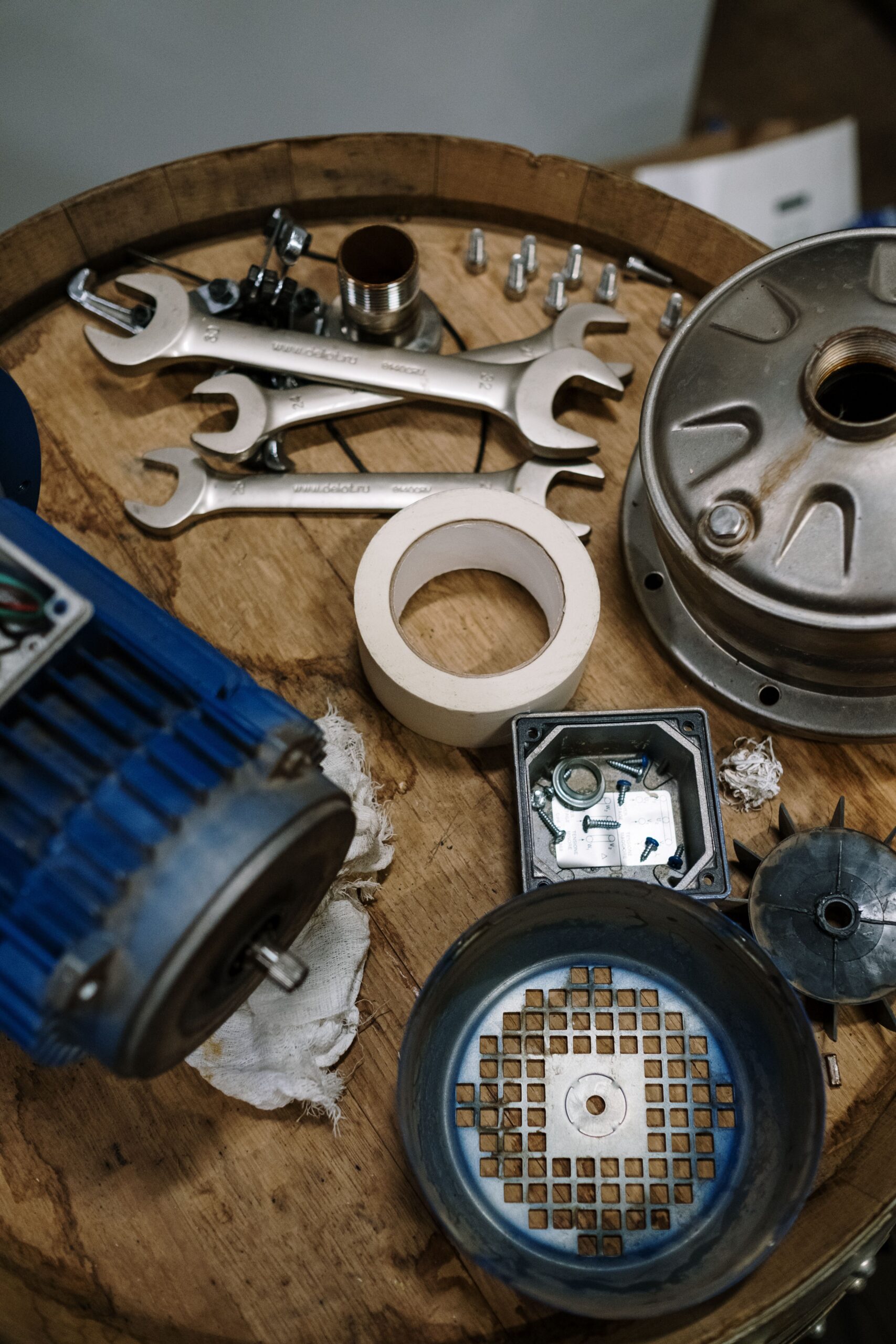
An induction motor supplied with too low a voltage draws more current to deliver the same torque: it heats up more and its windings age faster. Outages followed by repeated restarts multiply mechanical shocks and inrush current peaks (up to 6 to 8 times the rated current). When power suddenly returns, several motors restarting at once can cause an overload and trip the entire installation. Eventually, this leads to a burned-out winding — and the question of rewinding or replacing the motor.
What happens to electronics and instrumentation
Variable speed drives, programmable logic controllers (PLCs), electronic boards, and sensors are even more vulnerable. A voltage sag abruptly drains and then violently recharges the capacitors in power supplies; a sudden fault can destroy a component instantly. Sensors and measuring instruments lose their configuration or return erroneous values, throwing off process control. Unlike a robust motor, this equipment does not forgive repeated disturbances.
Protection solutions, from the simplest to the most comprehensive
There is no single fix, but rather a range of protections to combine according to the criticality of each piece of equipment. Here are the main levels, from the least expensive to the most comprehensive.
1. Basic protection: circuit breakers, relays, and surge arresters
This is the foundation. A thermal-magnetic circuit breaker or a thermal protection relay cuts the power before overcurrent destroys the motor. An undervoltage and phase imbalance protection relay prevents a motor from running under poor conditions. A surge arrester protects against lightning-related surges — common during the rainy season. Inexpensive, these devices are essential and form the first line of defense.
2. Voltage regulation: stabilizers and regulators (AVR)
When grid voltage is chronically too high or too low, an automatic voltage regulator (AVR) or a stabilizer maintains a stable output voltage despite input fluctuations. This is particularly useful where voltage regularly drops below 200 V or exceeds 250 V. This protects an entire workshop’s loads without having to intervene equipment by equipment.
3. Variable speed drives and soft starters
A variable speed drive does more than just vary speed: it smooths out startups, eliminates current spikes, and on some models, keeps the motor running through a brief voltage sag (“ride-through” function). A soft starter reduces electrical and mechanical shocks at startup — valuable when restarts are frequent after load shedding. When properly selected, this equipment extends motor lifespan while reducing energy costs.
4. UPS systems and generators: ensuring continuity
For critical loads that must never stop — safety controllers, servers, process instrumentation, emergency lighting — a UPS (uninterruptible power supply) instantly takes over on battery power, long enough to switch cleanly or wait for the grid to return. For longer-term continuity, a generator, paired with an automatic transfer switch, takes over during extended load shedding. The two are often combined: the UPS covers the milliseconds, the generator covers the hours.
How to choose: think in terms of criticality and total cost of ownership
The right protection depends on what it costs when the equipment in question stops working, not just the price of the device. A secondary ventilation motor does not warrant the same investment as a process pump whose failure halts all production. The logic here is that of total cost of ownership: compare the cost of protection to the cumulative cost of downtime, repairs, and lost production that it prevents.
| Load type | Main risk | Recommended protection |
|---|---|---|
| Standard motors (ventilation, conveying) | Overheating, startup shocks | Thermal relay + soft starter |
| Critical process motors | Production stoppage | Variable speed drive with ride-through + voltage regulation |
| Electronics, controllers, sensors | Destruction, data loss | Surge arrester + UPS |
| Entire site subject to load shedding | Extended outages | Generator + automatic transfer switch |
The West African context changes the equation
In the Sahelian climate, several factors compound the problem and reinforce the case for serious protection. Ambient heat already reduces motors’ thermal margin: prolonged undervoltage pushes them toward failure even faster. Harmattan dust and rainy-season humidity weaken poorly protected electrical cabinets. Finally, lead times for sourcing spare parts can shut down a line for several weeks: it is better to prevent damage than to scramble for a winding or a drive board afterward. Investing in protection is, above all, investing in uptime for your production facility.
FAQ
Can load shedding really damage an electric motor?
Yes. It is not the outages themselves, but the repeated restarts, voltage sags, and surges when power returns that wear down windings and cause overheating. A poorly protected motor, run on undervoltage, heats up and ages prematurely.
Is a UPS enough to protect an entire plant?
No. A UPS (uninterruptible power supply) is designed for critical loads and short runtimes, typically a few minutes. To cover an entire site during extended load shedding, a generator with an automatic transfer switch is needed; the UPS then provides seamless transition for sensitive equipment only.
Do you need a variable speed drive or a voltage stabilizer?
Both meet different needs. The stabilizer (AVR) corrects chronically unstable grid voltage for a set of loads. The variable speed drive controls and protects a specific motor, smoothing out startups and shocks. On a site affected by load shedding, the two are often combined.
How should I prioritize my protection investments?
Rank your equipment by cost of downtime. Protect first the loads whose failure would halt production or compromise safety, then move on to secondary loads. Total cost of ownership — downtime and repairs avoided — should guide the decision.
Protecting your equipment means protecting your production
In the face of an unstable grid, protecting your equipment is not an expense: it is insurance for the availability of your production facility. The right approach combines several levels — basic protection, voltage regulation, variable speed drives, and continuity solutions — sized according to the criticality of each load. GEMCO supports industrial operators in Burkina Faso and West Africa in selecting, supplying, and commissioning these solutions, with leading brands such as WEG (motors, drives, transformers), Schneider Electric, and ABB.
Contact GEMCO’s engineers for a diagnosis of your facilities and a quote tailored to your site.