In a mine or quarry, the conveyor belt is rarely in the spotlight—until the day it stops. Yet it ensures the continuous transport of materials between crushing, screening, and storage, and its availability directly determines production throughput. In West Africa, where operating conditions are harsh and lead times are long, mastering conveyor belt wear is a major performance lever. This article details the causes of failure, their real impact on costs, and best prevention practices adapted to the local context.
The critical role of conveyor belts in mining
The conveyor belt is the connecting link of the entire production chain. Unlike isolated equipment where a breakdown remains localized, a stopped conveyor blocks all downstream stations. This strategic position makes it a priority focus for any maintenance manager.
A conveying system relies on several interdependent components whose condition must be monitored together:
- the belt itself (textile or metal carcass and cover);
- the carrying and return rollers, which support the load and guide the belt;
- the drive and tail pulleys;
- the scrapers and cleaning devices;
- the tensioning system, ensuring proper belt-pulley contact.
The failure of a single one of these elements can lead to the rapid degradation of the others, hence the value of a global approach rather than piece-by-piece.
Main causes of wear and tear
Belt degradation almost always results from a combination of mechanical and environmental factors. Identifying them allows for action on the cause rather than the symptom.
Poor belt tracking
Misalignment causes lateral friction against the structure and premature edge wear. This is one of the most frequent causes and, fortunately, one of the easiest to correct by adjusting rollers and installing guides.
Poorly designed loading points
Where materials fall onto the belt, the impact of abrasive blocks nicks the cover. A poorly oriented chute, excessive drop height, or the absence of an impact zone significantly accelerates cover wear.
Foreign objects and longitudinal tears
The jamming of a metal element or a large block can cause a longitudinal tear, the most costly type of damage as it can run for several meters in seconds.
Improperly adjusted tension
Insufficient tension leads to slippage on the pulley, a source of heat and joint fatigue; excessive tension overstresses the carcass. Proper adjustment is a balance to be monitored over time.
In the West African context, dust, heat, and the highly abrasive nature of ores amplify each of these phenomena. Regular monitoring, in the spirit of condition monitoring, allows these deviations to be detected before failure.
The real impact of downtime on production
The classic mistake is to evaluate a conveying incident solely by the price of the part. However, the true cost is measured much more broadly:
- the downtime of the entire line, sometimes several hours or even several days;
- the lead times for the belt or replacement components, often long due to regional logistical constraints;
- the safety risks associated with emergency interventions on equipment at height or in motion;
- the loss of production and potential contractual penalties.
It is this total cost of ownership logic, and not just the purchase price, that should guide decisions—a reasoning we detail in our article on TCO in industrial environments. Supply chain management plays a decisive role here in reducing delays in the event of an incident.
Best prevention practices adapted to the local context
Several measures, accessible even with limited resources, allow for extending the lifespan of belts and making conveying more reliable.
Inspect regularly
Planned visual inspections of edges, joints, rollers, and scrapers allow for spotting the onset of wear. This approach is part of the broader debate between preventive and predictive maintenance.
Equip with protection devices
Centering devices and tear detectors automatically stop the belt before a defect worsens, preventing a minor incident from becoming major damage.
Optimize loading point design
Reducing the drop height, centering the material flow, and installing impact bars significantly decrease cover wear at the most stressed point.
Anticipate critical wear parts
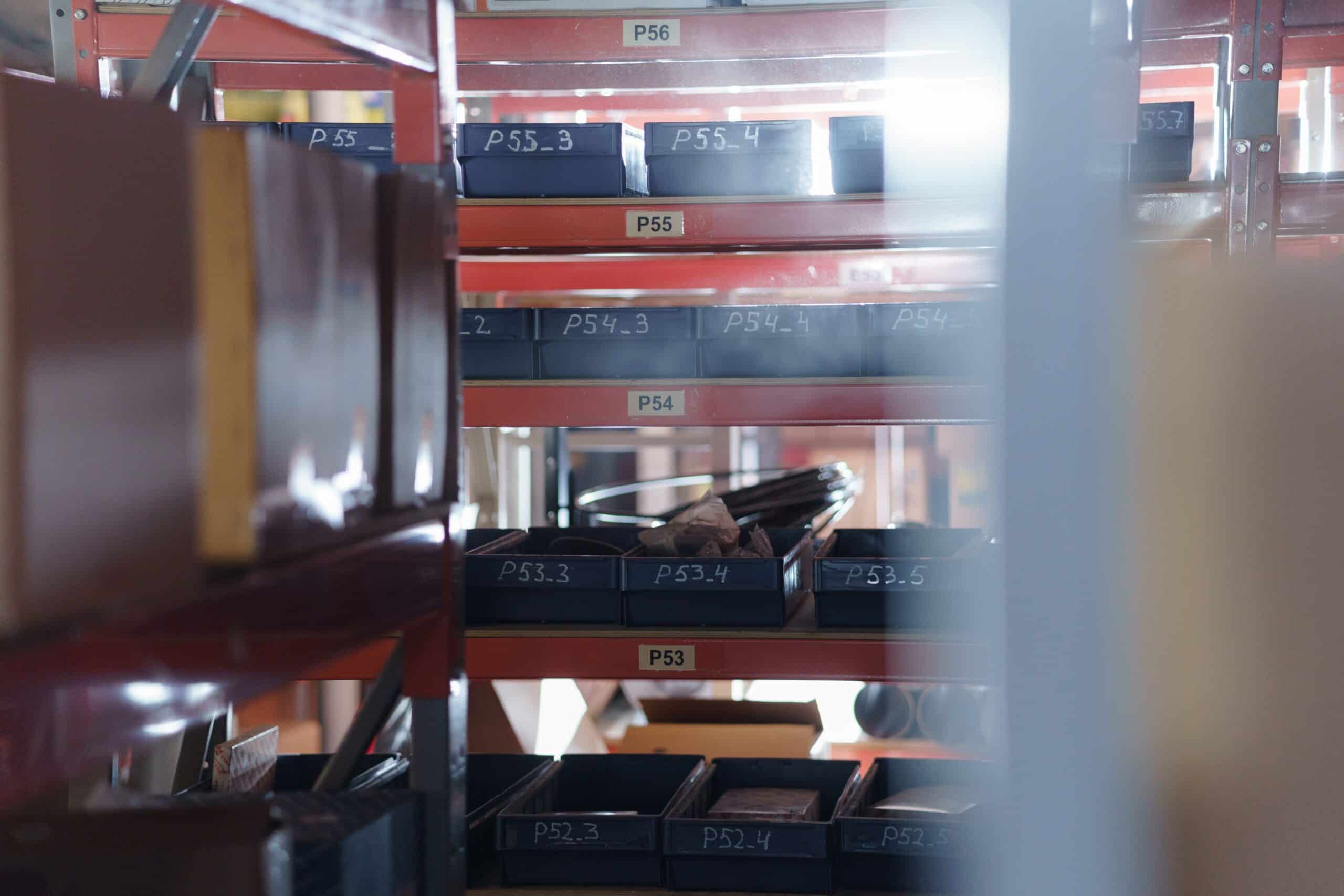
Building a safety stock of critical parts—rollers, scrapers, joining clips—limits downtime. The choice of compliant parts, discussed in our guide on OEM sourcing, remains decisive for reliability.
Adapting these practices to local constraints—availability of skills, dusty environment, procurement distances—is the key to a realistic and sustainable strategy.
FAQ – Conveyor belts in mining
What is the average lifespan of a conveyor belt?
It varies from a few years to more than a decade depending on the abrasiveness of the ore, the quality of the cover, the design of the loading points, and the rigor of maintenance. Careful operation can easily double the lifespan compared to a neglected installation.
How to detect a tear early?
Through regular visual inspections and, for critical installations, tear detectors and sensors that stop the belt as soon as an anomaly is identified.
Is it better to repair or replace a damaged belt?
It all depends on the extent of the damage and the condition of the carcass. A localized repair (vulcanization, clipping) is often sufficient for minor damage, while a fatigued carcass requires replacement. Total cost reasoning helps in making the decision.
Conclusion
Conveyor belts represent a significant portion of downtime risks in mines and quarries. By combining regular inspection, protection devices, careful loading point design, and anticipation of wear parts, West African operators can significantly reduce unplanned downtime and secure their production. Prevention remains, once again, the most profitable investment.
Need compliant wear parts available quickly for your conveyors? The GEMCO teams support industrial and mining sites in West Africa in the sourcing and supply of their critical components. Contact us to secure the availability of your facilities.