On a mine site, in a cement plant, or in a factory in West Africa, the failure of an electric motor frequently brings an entire line to a standstill. A critical question arises immediately: should you rewind the motor or replace it with a new one? The answer is never automatic; it depends on cost, age, condition, expected efficiency, and procurement lead times. This guide offers a clear decision-making framework based on established industry practices and adapted to local operational realities.
Rewinding vs. Replacing: What Does It Involve?
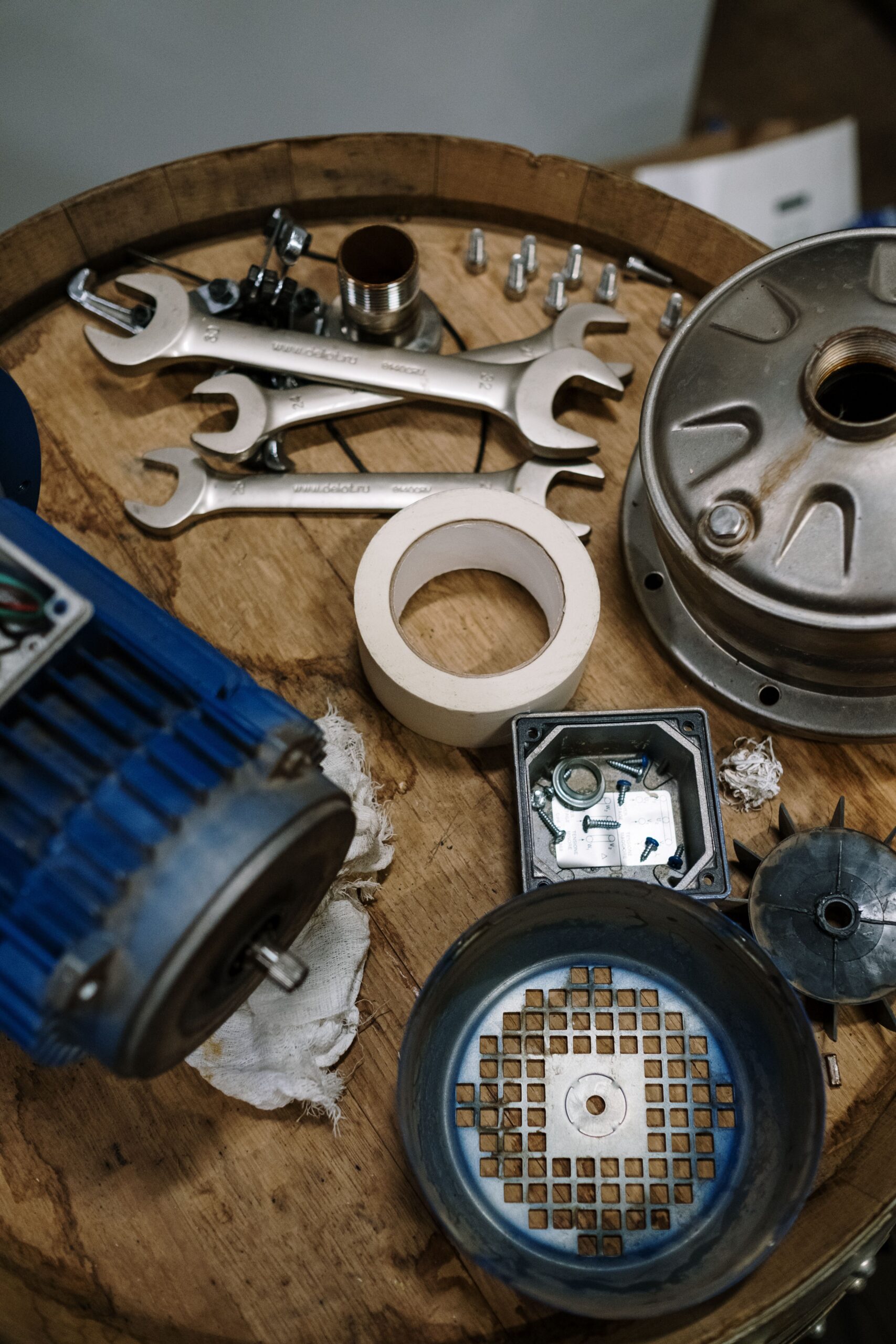
Rewinding involves replacing the stator windings of a motor whose insulation has burned out or degraded, while retaining the frame, rotor, and often the bearings. It is a proven repair method, typically less costly in the short term than purchasing a new motor and often faster to source locally.
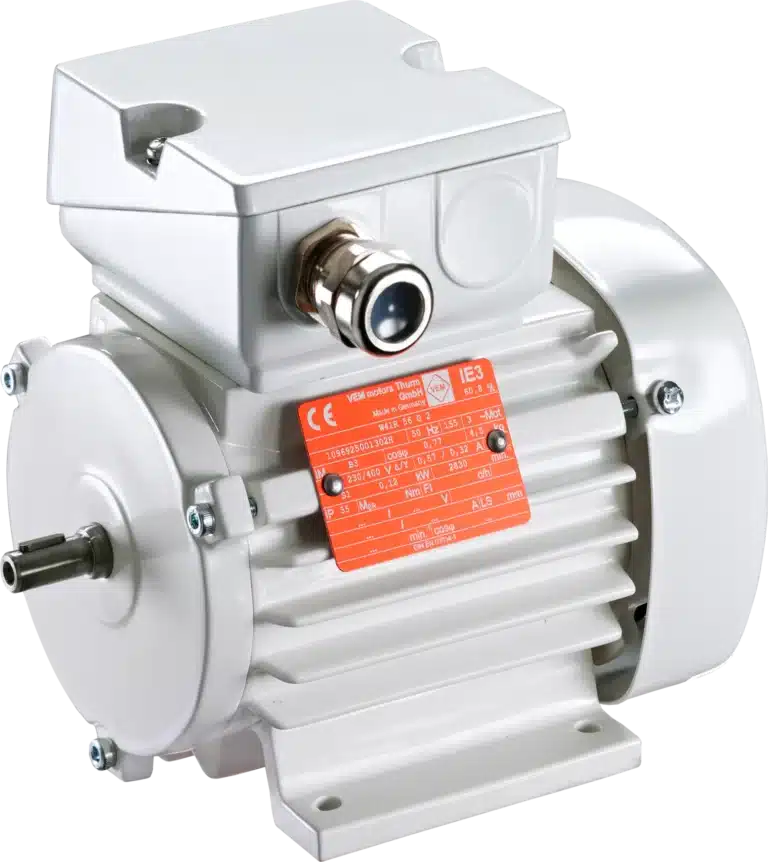
Replacement, on the other hand, consists of installing a brand-new motor, generally featuring a higher efficiency class (IEC 60034-30 standard: IE3 or even IE4). It requires a higher upfront capital investment but can prove more cost-effective over time, especially for high-duty-cycle applications.
The Cost Factor: The 60% Rule
The most widely accepted rule of thumb in the industry is straightforward: if rewinding costs exceed approximately 60% of the price of an equivalent new motor, replacement is the better option. Below this threshold, provided the mechanical core and frame are intact, repair is usually justified.
However, it is crucial to consider the total cost rather than the purchase quote alone: labor, transport, and especially production downtime must all be factored into the equation. This reflects the total cost of ownership (TCO) methodology that we also apply when selecting equivalent parts.
The Efficiency Factor: High-Quality Rewinding Causes (Almost) No Loss in Performance
It is a common misconception that rewinding inevitably degrades energy efficiency. The reality is more nuanced. Landmark studies conducted by the EASA (Electrical Apparatus Service Association) and the AEMT demonstrate that a rewind executed according to best practices—complying with the IEC 60034-23 standard, maintaining precise stator burnout temperature controls, and using high-grade materials—preserves efficiency within ±0.2%, even on IE3 motors.
Conversely, substandard rewinding (such as overheating the lamination stack or altering winding geometry) can cause an efficiency drop of 1% to 5%. For a continuous-duty motor, this degradation significantly drives up monthly electricity costs. Selecting a qualified rewind shop is therefore critical.
Why is this so vital? Because over the lifespan of a motor, more than 90% of the total cost of ownership stems from electricity consumption, vastly outweighing the initial purchase price and maintenance. A loss of even a few efficiency points translates into substantial financial waste over several years—a consideration very similar to our analysis regarding the advantages of variable frequency drives (VFDs).
Additional Decision Criteria
Age and Mechanical Condition
A motor that is under 15 years old, with an undamaged lamination stack (the magnetic core) and sound mechanical integrity, is an ideal candidate for rewinding. Beyond that age, or following multiple successive rewinds, replacement with a modern, high-efficiency unit is generally the wiser move. Underlying mechanical issues such as shaft misalignment or worn bearings must also be addressed, or the repaired motor will fail again rapidly.
Power Rating and Motor Specificity
For high-power motors (above ~100 kW) or specialized units (explosion-proof, medium/high-voltage, custom-engineered), rewinding is almost always more cost-effective than replacement, given the high capital cost and lengthy manufacturing lead times of new units.
Procurement Lead Times
In West Africa, the lead time for sourcing a new motor can be significant. If critical production is stopped, urgency may outweigh theoretical lifecycle optimization: a local rewind completed within a few days may be far preferable to waiting several weeks for a new unit to arrive. Preparing for these contingencies requires effective supply chain management and a robust critical spare parts inventory strategy, similar to managing part obsolescence.
Integrating the Decision into Your Maintenance Strategy
The rewind versus replace decision should never be made in the heat of an emergency breakdown; it should be planned in advance. Identifying critical motors and tracking their age, efficiency class, and repair history allows teams to make proactive, objective decisions. This approach aligns with the broader balance between preventive and predictive maintenance. Furthermore, when replacement is chosen, the technical compliance of the sourced component (power rating, IE class, frame dimensions, mounting type) is essential to a successful installation.
FAQ – Rewinding vs. Replacing an Electric Motor
At what cost threshold should a motor be replaced rather than rewound?
The industry benchmark is roughly 60% of the price of an equivalent new motor: above this threshold, replacement is typically the more viable choice. This evaluation must account for total costs, including downtime.
Does rewinding inherently reduce motor efficiency?
Not necessarily. When performed strictly in accordance with industry standards (such as IEC 60034-23), rewinding preserves efficiency within ±0.2%. Poorly executed rewinds are what cause efficiency drops of 1% to 5%. Workshop competence is the decisive factor.
Should a failure be used as an opportunity to upgrade to an IE3 or IE4 motor?
In most cases, yes—especially for an older unit running continuously. The premium for a high-efficiency motor is typically recouped through energy savings, as electricity accounts for more than 90% of the total cost of ownership.
Conclusion
Rewinding or replacing is not a philosophical question, but a data-driven financial decision: relative cost (the 60% rule), motor age and condition, local rewinding capabilities, power rating, and, above all, long-term energy efficiency. By anticipating these choices for critical assets, industrial and mining facilities across West Africa prevent costly forced decisions and protect both operational uptime and operating margins.
Need a compliant electric motor, expert guidance on efficiency classes, or rapid delivery? The teams at GEMCO support West African industrial operators in sourcing multi-brand motors and heavy equipment. Contact us for a tailored proposal matching your technical and scheduling requirements.